Cat Myths Debunked: Separating Fact from Fiction
- Sanchez Tucker
- Nov 13, 2024
- 5 min read

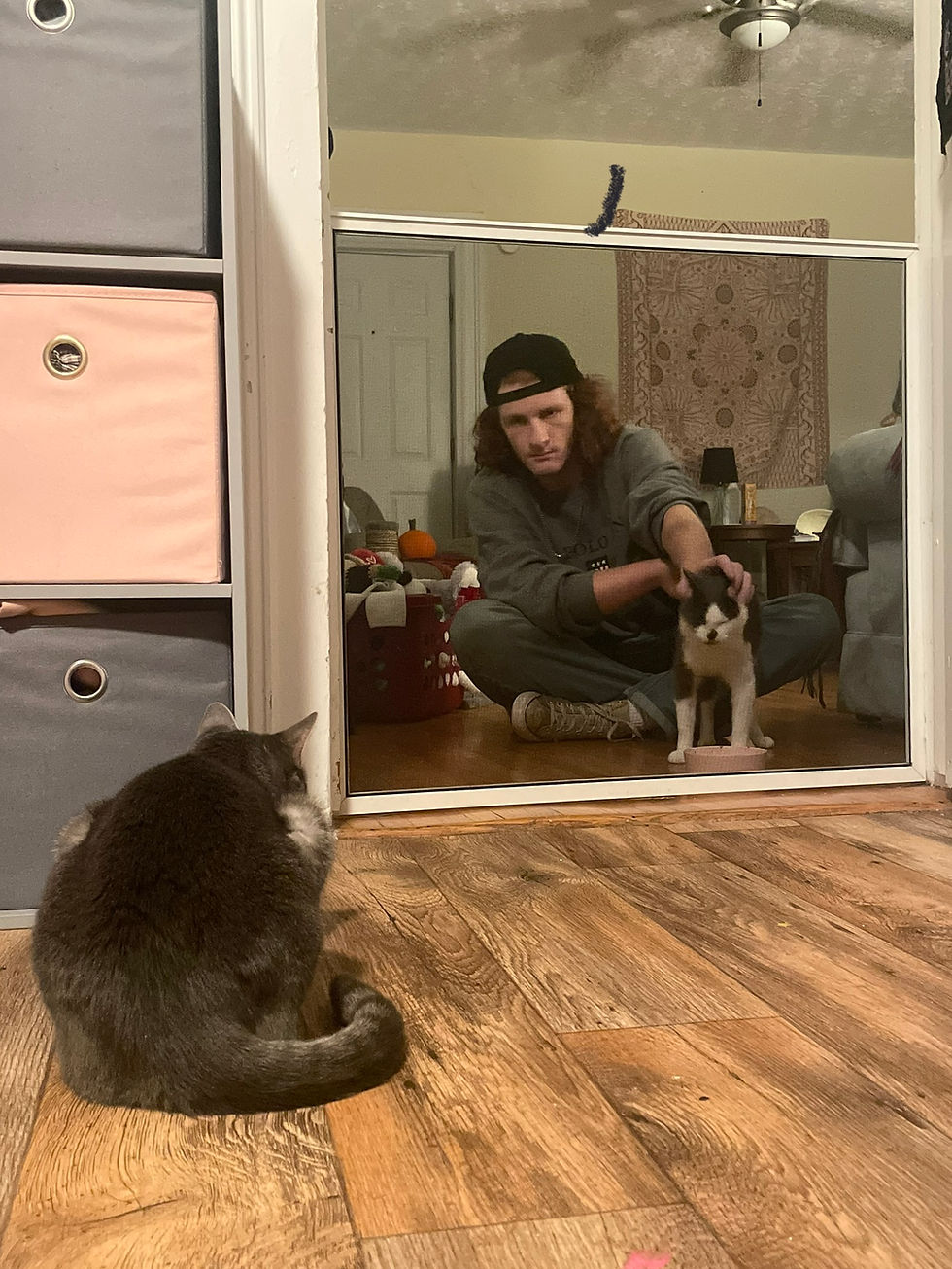
Welcome back to Cat Care for College Students with Sanchez (the human) and Agnes (the cat). Big news for our little family of four! Benedict has tested negative for all transmissible diseases and pests, which means we can officially keep him without putting Agnes in harm’s way. They spent the weekend in the same house sharing meals with a door between them. Unlike dogs, cats can’t just be thrown into a room together and be expected to become best friends. It will take weeks, possibly months, to slowly introduce them to each other. So far, Agnes is (unsurprisingly) the difficult one, hissing at Benedict through the door when he meows during dinnertime. Though, if a random man appeared in my apartment after months alone, I would hiss too.

Taking in our Benedict has reminded me of when we first adopted Agnes. She’s the first cat I’ve ever had, so we started our relationship a little rocky. There are so many things I wish I’d known back then that are now making it much easier to acclimate Benedict to our college lifestyle. Which brings us to this week’s topic: cat myths and how to separate fact from fiction.
Myth: Cats Don’t Love You
Cats are often stereotyped as the “mean” counterparts to dogs. While I love a good dog, as we’ll discuss later, this idea is actually rooted in the history of domestication. Both dogs and cats were domesticated to work, but there’s a difference: dogs’ jobs typically required them to work side-by-side with humans (think sled dogs, medicine runners, herding), whereas cats had more solitary jobs (like barn cats and mousers). When cats moved indoors, they were mistakenly assumed to be solitary animals, which led to a lot of misconceptions about their personalities.

The Reality? According to Love of a Cat, cats actually tend to form more secure attachments to their humans than dogs do. Cats show love in more subtle ways: slow blinks, following you around, rubbing against your legs—these are all signs of affection. I get the urge to pick up and love on your cat, but respecting their boundaries is a much better way to maintain a positive relationship. Benedict is a big snuggler, but Agnes prefers to sit on my feet and purr. Both of them are showing love, just in their own unique kitty ways. (P.S. for all the “your cat would eat you if you died” folks: so would your dog.)
Myth: Declaw Your Cat to Save Your Furniture
Declawing used to be incredibly common. When we first brought Agnes home, the first thing my dad asked was when we were planning to declaw her (to save our furniture). I immediately told him to look up the realities of cat declawing. The next day, I got a call from my dad, who was in tears, apologizing for even suggesting it and expressing regret for the cats he grew up with who were declawed.
So what is so bad about declawing that it could make this 6 '4, jacked wrestling coach burst into tears? Declawing is equivalent to amputating the last knuckle of a human finger. It can cause permanent nerve damage, litter box aversion, and increased biting (Humane Society). It fundamentally changes the way a cat walks and interacts with its world, impacting their physical and mental health. Declawing is so inhumane that it has been banned in multiple countries and some U.S. states.
If your cat has a scratching problem, it’s likely they actually have a nail problem. Regular nail trims are far more humane (even though they are drama queens about it) and can help prevent unwanted damage. For college students, this is especially important if you’re renting. We recommend a scratch post in every room where you spend time with your cat. This allows them to stretch those claws and decrease the amount of necessary nail trims. For more information, check out The Paw Project, a non-profit dedicated to banning declawing, and this video from cat behaviorist Jackson Galaxy.
Myth: Cats and Dogs Are “Natural Enemies”

Movies would have us believe that cats and dogs are destined to hate each other. In reality, they just need some time to adjust. As we mentioned with Agnes and Benedict’s introductions, cats take a lot longer to warm up than dogs. Agnes and my parents’ dog, Sylvie, are now the best of friends, especially when they get together to yell at those damn birds. But it wasn’t always that way—it took a lot of patience, hissing, and a few baps from Agnes before they found common ground.
How to Make It Work: Introduce cats and dogs gradually, starting with short, supervised visits. Give the cat an “escape route” and start in a space the cat is already comfortable in. Sylvie had three or four brief visits to my home before she and Agnes spent any extended time together, and we kept Sylvie on a leash during the first meeting. Now they enjoy many games of “runny-chasey” and naps together.
A big problem I see in my peers is when a dog owner and cat owner move in together without preparing their pets. If that’s the case, check out this article from the Animal Humane Society on how to make it work. But keep in mind, just like random freshman roommates, there’s no guarantee they’ll get along, even with these tips. It’s up to you to keep them safe and happy—sometimes that might mean rethinking living arrangements or rehoming a pet.
Myth: Outdoor Cats Are Happier
Forgive my bluntness, but outdoor cats are dead cats. Mr. Benedict Beans has the vet bills to prove it: a broken tail, a snapped tooth, and a scar on his face from his time outdoors. Adopting a cat and then choosing to expose them to the cruelty they are guaranteed to face outdoors does not make them happier and decreases their lifespan by an average of 10-15 years.
Risks of Outdoor Life: Outdoor cats are at high risk for contracting feline leukemia, feline AIDS, FIP, toxoplasmosis, distemper, and rabies. If all of that wasn’t enough, in some parts of the U.S., it was even legal to shoot feral cats until 2007, a practice that sadly continues in some areas. Surprise, your cat and a feral look identical to a disgruntled homeowner with a gun. Cars also pose significant risks- traffic accidents and hiding in warm engines during cold weather end with fatal consequences.
The main argument for outdoor cats is enrichment, but enrichment can happen indoors! Providing plenty of climbing space, toys, and playtime can keep them happy and stimulated. Check out last week’s post for more ideas on indoor enrichment. Adopting is a commitment that requires you to provide a safe, happy, and enriching home for them. If keeping your cat fully indoors is not possible for you, owning a cat is not possible for you.
People often think cats are low-maintenance pets, but being a high-maintenance pet parent is one of the best choices you can make for your kitty. I wasn’t perfect with Agnes in the beginning, but taking the time to learn and understand her behavior has helped me overcome old biases. She’s a sweet, clawed, dog-loving, indoor cat, and I’m lucky to have her in my life. Adopting a cat has been one of the best decisions I’ve made as a student, but it’s essential to be fully prepared for the responsibility.
Thank you for tuning in to this week’s (admittedly grimmer) edition of College Cat Care. We hope debunking these myths helps you prepare for a furry friend or deepen your bond with your current fur baby. As always, check out our Twitter and Instagram for your regular dose of cat photos. Come back next week for our final post of the semester: The History of Domesticated Cats: From Wild Hunters to Household Companions.


Comments