The History of Domesticated Cats: From Wild Hunters to Household Companions
- Sanchez Tucker
- Nov 20, 2024
- 5 min read

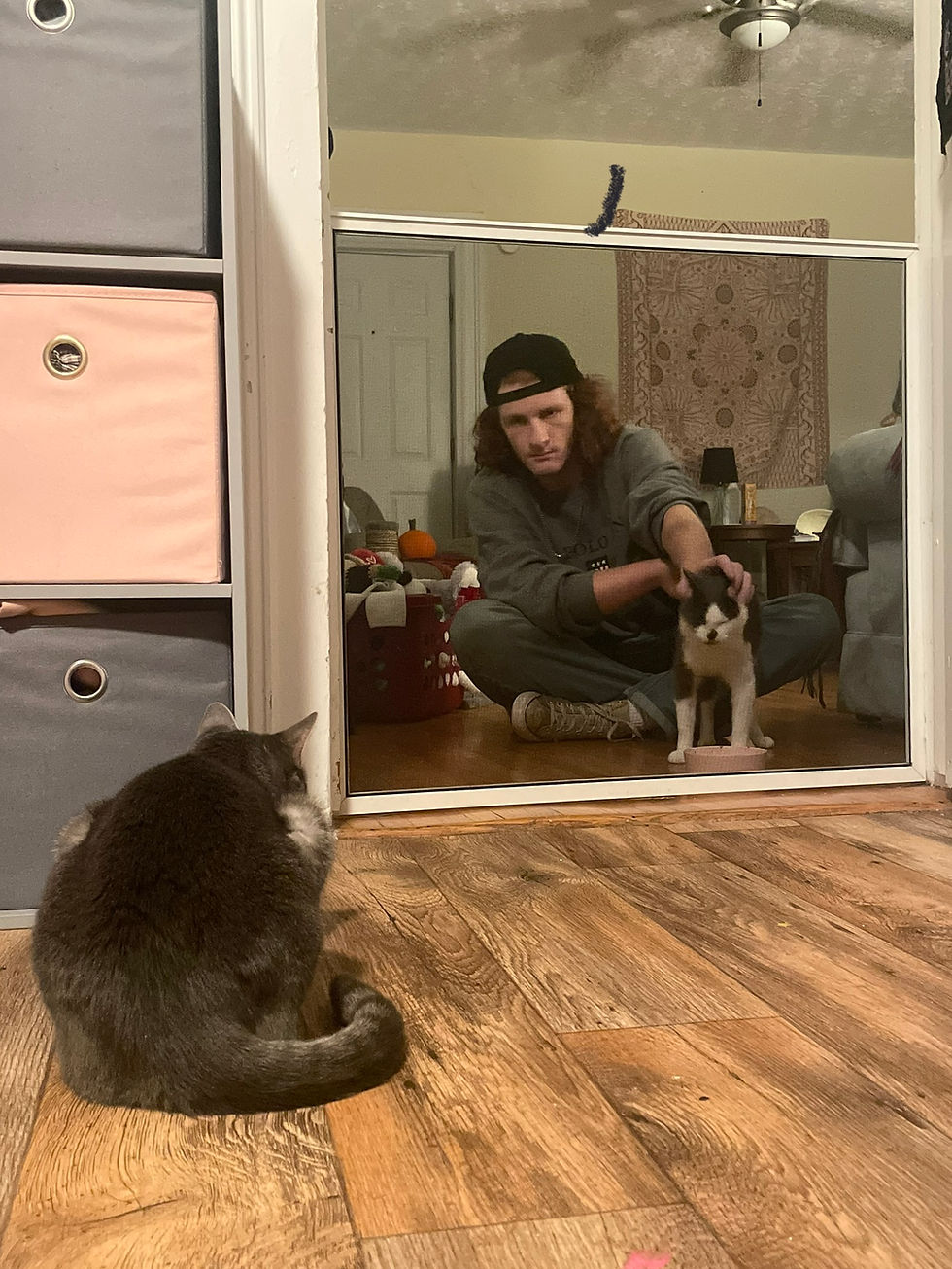
Welcome back to Cat Care for College Students with Sanchez (the human) and Agnes & Benedict (the cats). The two demons I allow to live with me rent-free have had a tough week as we have moved into the second phase of their introductions. The two of them now get daily screen time where they stare at each other through a divider in a doorway. Agnes has been the problem child and keeps hissing at poor sweet Benedict, who just keeps meowing at her pitifully. Agnes gets along with my parents' dog so well that we figured she would be the easy one since, unlike Benedict, she has never been jumped by another cat. They are both getting better, though, so we have yet to worry that it won’t work out between them. Here's hoping by the end of the year the two of them will be able to stay in the same room! I may go insane otherwise…

Domestic cats as we know them today are descendants of African wildcats (Felis silvestris lybica), a small, sandy-gray creature that looks nearly identical to domesticated cats. There are 41 species in the cat family (Felidae), with a majority of them being close in size to a house cat. There has been some debate as to the true origin of cat domestication, as with so many small-sized members of the cat family, it is difficult to determine what genes came from where. The general and most accepted answer is that domestication started in the Fertile Crescent nearly ten thousand years ago (SciNews, The Conversation ). African wildcats lucked out and happened to be nearby when people began settling into village lifestyles and growing food. Much like the barn cats of today, these wildcats made excellent mousers. The original African settlers got cats to stick around in the same way we got Benedict, though we used hot dogs and they used rodents. Food is a great motivator, so wildcats started to hang around people more and more until they settled into living alongside humans. In a time when pets were not exactly commonplace, the original cat parents had more of a working relationship with felines—though head scratches are not a new invention.
Evolution from Wild Cats to Modern House Cats
As we have mentioned on this blog before, modern cats have undergone very few genetic changes through domestication. According to Richard Gray with The Guardian, European researchers found that, between wildcats and domestic cats, only 13 key genes were different. One of these genes is responsible for dopamine, meaning wildcats that responded well to pets and scratches were more likely to breed, making babies that were more likely to stick around humans for affection. The other key genes to change were fear conditioning and memory, which is why food was so instrumental in cat domestication. Six genes appear across every single feline species! One thing domestication has not changed is their hunting instincts, which is why proper stimulation is so important for domesticated cats. Many people use this as an argument for allowing cats outside, but their decreased fight-or-flight instincts due to genetic changes make it dangerous for them to live outside.
Physically, domestic cats and wildcats are very similar as well. Purina describes cat ancestors as “sandy brown to yellow gray in color, with black stripes on the tail, orange-colored ears and underbelly, white rings around the eyes, and black rings around the tail and bottom of the legs.” They tend to weigh between six and fourteen pounds, slightly larger than the average house cat, but not by much. Wildcats have longer legs as well, allowing them to pounce higher, run faster, and climb quicker than our stubby-legged domestic breeds. Selective breeding, which began around 150 years ago, is the primary cause of these physical differences. People wanted their cats in new colors, smaller, and with an easier temperament. This is how there are so many coat patterns and so few breeds of cats!
The Role of Cats in Culture
Egypt
Historical culture studies are teeming with examples of cats serving as symbolic, and at times godly, figures. The most well-known example is Ancient Egypt’s portrayal of cats as divine beings. Their portrayal in artwork saw them as protectors of the sun god Ra, who was often threatened by snakes at night. When they weren’t stabbing snakes, they were shown sitting by people’s chairs, playing, and dressed in meticulous gold outfits. Even the poorest people of the time fashioned jewelry for their cats. In death, cats were carried into the afterlife with their human companions, often being found mummified alongside them. This is an incredible display of affection in Ancient Egyptian culture, as the things they are buried with represent the things dearest to them.
Europe
Medieval Europe was not so kind to these furry little guys, seeing them as arbiters of witchcraft and bad luck. It was incredibly common to kill cats during this time to prevent bad luck or witch attacks. These cat haters made a grave mistake in killing what literally every other culture in history recognized as incredible mousers. Many historians believe that the killing of a majority of Europe’s cat population contributed heavily to the spread of the plague—you know, the disease carried by rodents. It pays to love cats!
Asia
Cats were also revered in Asian culture as guardians of their temples. Cats were even referenced in the oldest collection of Chinese poetry, Classic of Poetry. Keeping cats was more of a companionship choice in Chinese culture over a divine one, with art depicting cats as spoiled little babies. Cat history in China is so deep that modern cat owners, albeit jokingly, state that cats were sent from another world to enslave us.
Today
Cats are still icons in today’s culture. It is estimated that there are 6.5 million cat photos on the internet, with some of them being iconic fixtures in pop culture. Grumpy Cat is estimated to be worth nearly 100 million dollars alone, Nyan Cat was one of the most viewed videos of 2011, and Keyboard Cat boasts 80 million views. These tiny little freeloaders have had cultural impacts across thousands of years of human history, and it is no surprise to anyone who has had one as a pet why—there is no love like cat love.

I want to thank all of you for following me on this journey this semester. Bringing Agnes home was one of the scariest, but best, decisions I have ever made. It may sound silly, but she has genuinely saved my life and given me a reason to get up every morning and work to ensure she has the best life I can give her. I hope everyone gets to experience the love these furry little guys bring into our lives and hearts. As always, check out our Instagram and Twitter for all your Agnes & Benedict photo needs—we will continue our Twitter rampage even at the completion of this blog!


Comments