Breed Misconceptions: Color Does Not a Personality Make
- Sanchez Tucker
- Oct 17, 2024
- 4 min read

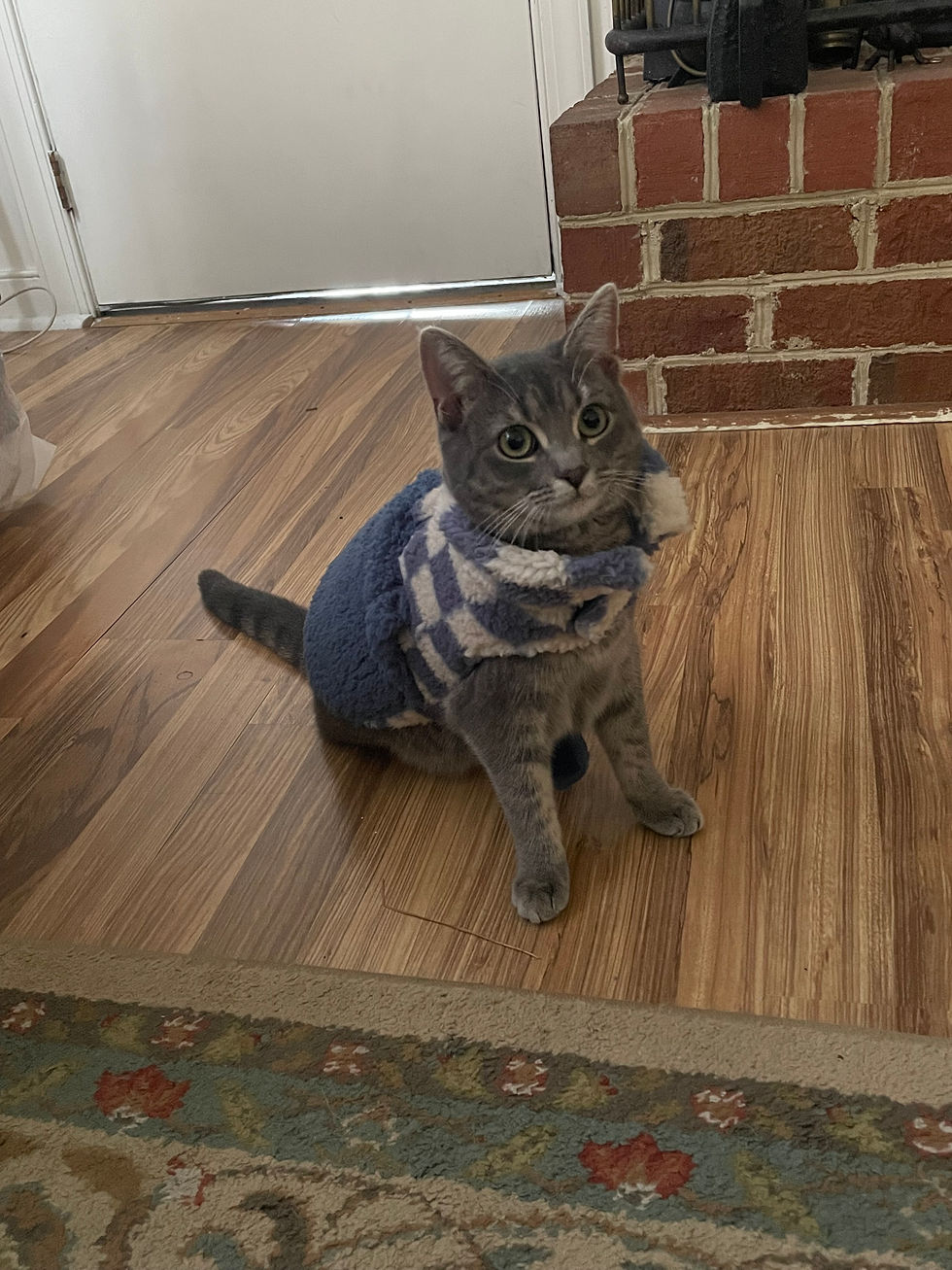
Welcome back! It’s Sanchez (the human) and Agnes (the cat) back this week to discuss misconceptions around cat coloring and breed. Cats are sorted into two primary categories: their breed and their coat pattern. Agnes is a gray American Shorthair (breed) mackerel tabby (coat pattern). We didn’t factor in breed or color during our adoption process, but it is not uncommon for people to use these as the basis for their cat choice. Unfortunately for our furry friends, the idea that a cat's breed or color guarantees their personality is not only scientifically inaccurate, but also dangerous. It can lead to the mistreatment or misunderstanding of cats, especially those in rescue shelters, due to these stereotypes.

Based on her breed, Agnes is "supposed" to be quiet, gentle, and easygoing (Mueller, 2023). If you spend more than five seconds around her, she is screaming, smacking, and sprinting at every opportunity. Based on her coat color, she should be affectionate, intelligent, and (again) quiet (PetScreening). While she likes the occasional head scratch, she is far from affectionate. I hate to admit it, but she also isn’t the sharpest tool in the shed. This blog will cover how to avoid these misconceptions and best adjust to your cat's needs!
Understanding Your Cat’s Personality
With the understanding that a cat's color and breed do not guarantee they have a specific personality, how can you understand who your cat is? Cats' personalities are based on their upbringing and environment, so expect them to start acting like you. If you adopt a kitten like we did, they will hopefully grow into your family and home. For Agnes, she ended up being a bit of a lazybones like me and her dad, but she also likes to yap with us. If you adopt an older cat (which, yay, gets the oldies a forever home too!) it is important to pay attention. They may not show off their personality in the first few days; just keep an eye on them to see when they like to sleep, play, and eat. Keep a solid routine from the start so they can find their place! Always be ready to adjust at any moment. These fickle creatures change their minds like nobody's business. If they bite or scratch when you pet them, they aren’t bad; they just don’t like pets. Wiggles when they’re picked up? Put them down. Listen to your cat, not their breed or coloring.
Common Breed and Color Misconceptions
It is important to know what these misconceptions are so we can avoid perpetuating them. Please note, these are falsehoods and do not represent breeds as a whole. Orange cats overwhelmingly get the brunt of the color = personality rhetoric. Searching for orange cats on YouTube yields dozens of videos about “orange cat behavior,” how they are “weirdos,” and even some calling orange cats “stupid.” Garfield truly ruined the public perception of this color type. In reality, a lot of the behavior orange-cat-influencers display in this online content is due to them being under-stimulated. Orange male cats tend to be larger than other cats, which means they require more stimulation. Under-stimulation leads cats to destructive behavior, increased vocalization, and attention-seeking behavior—aka, all of the things the internet stereotypes orange cats as doing. We highly recommend checking out Jackson Galaxy's video on the subject.
Black cats are also misconstrued more than other cats due to their prominence in the media. The longstanding superstition that black cats are bad luck or a sign of evil leads potential adoptees to assume they are mean, dangerous, and not good for families. In reality, black cats are no different from any other cat whose personality will develop independently of their coloring. White cats are thought to be prissy, primarily because of the price tag associated with adopting them, and gray cats, as previously mentioned, are thought to be quiet and shy. Do not assume your cat's personality will be the same as all other cats of that breed, and be prepared for their personality to change as they age!
The Real Danger of Stereotypes: Violence and Neglect

Basing opinions on cats' personalities on their breed and color leads to violence and neglect. Black cats are most at risk of violence due to the aforementioned superstitions surrounding them. According to AFB Pet Club, black cats are 50% more likely to be euthanized than other cats. They also face increased rates of abandonment and attacks. It is hard to imagine wanting to hurt these loving creatures, but centuries of folklore and superstition have put black cats at risk in more ways than one. Furthermore, cats perceived as “stupid” or “mean” may face neglect and under-stimulation. Cats that are thought to be simple or calmer based on their coloring and breed are often not given enough enrichment, which leads to more behavioral issues, which in turn leads to abandonment! Meeting your cat where they are is imperative for not just their happiness, but yours. Under-stimulated cats like to destroy your furniture, use the bathroom anywhere but the litter box, and face increased rates of feline depression.
As always, remember to adopt, not shop! Listen to your cat; they communicate far more than we give them credit for. Today, Agnes is telling me to quit writing, give her pets, and that she is ready for breakfast.
Thank you for checking out this week's edition of Cat Care for College Students. Come back next week to learn about cat nutrition and how to keep those bellies full on a budget! Remember to follow our Instagram and Twitter for all things Agnes.


Comments