Understanding Cat Behavior: What Your Cat is Really Trying to Tell You
- Sanchez Tucker
- Oct 2, 2024
- 3 min read

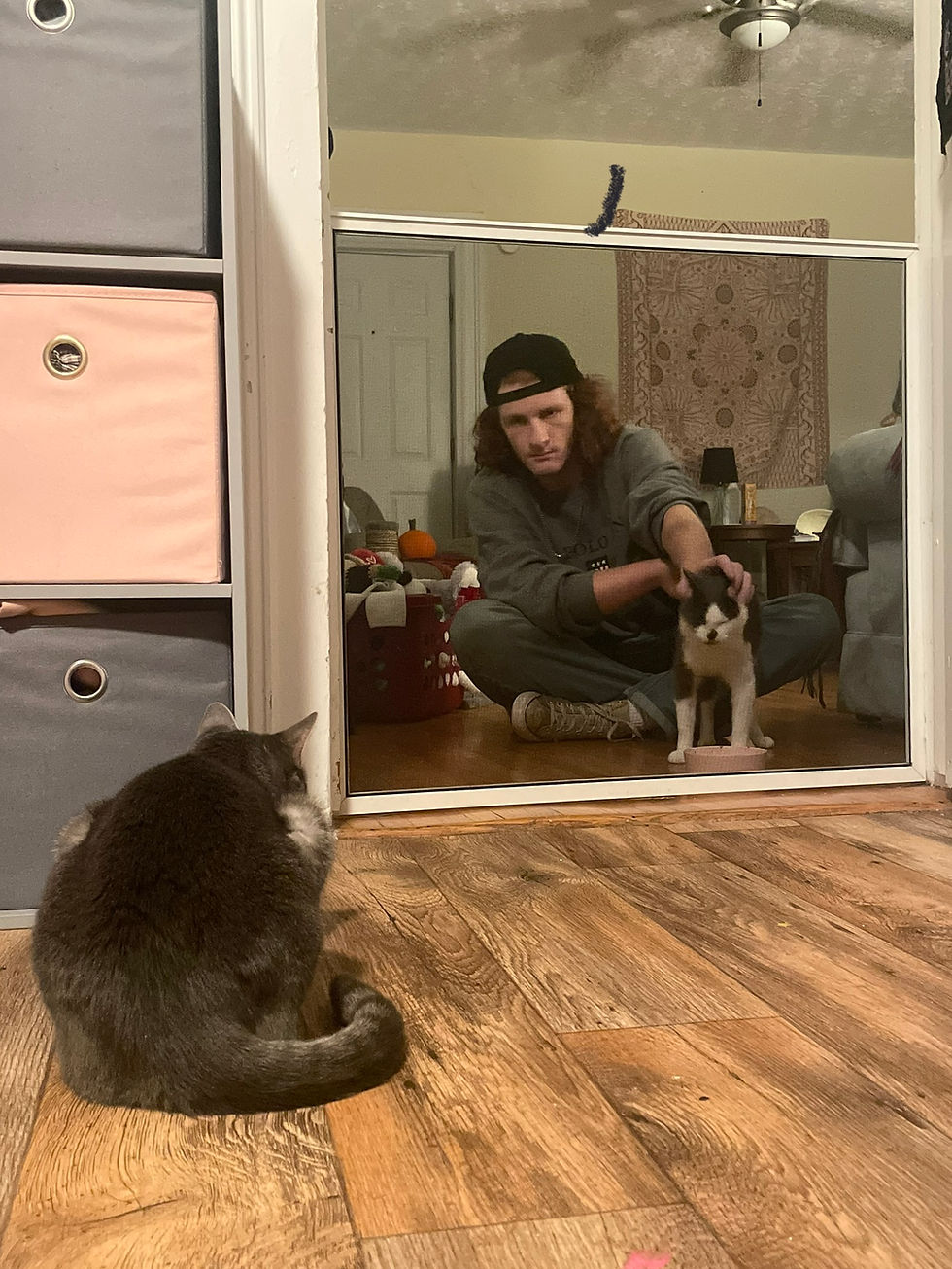
Hi! Me (the human) and Agnes (the cat) are back again to discuss preparing yourself for bringing home a cat as a college student. Agnes was adopted at only three months old, so we got to watch her personality develop as she grew into adulthood. Right now, we are in the “teenager phase” of raising a cat. From about eight months to two years old, cats are complete menaces. As I sit here typing, Agnes is currently sprinting back and forth between rooms while SCREAMING at me to throw her toys. So yeah… kittens can act a little weird sometimes.
Recently, jokes about cat behavior has been blowing up online. From discussions on biscuit making to airplane ears, it seems no one truly understands what their cat is trying to communicate. This week's blog is dedicated to exploring the intricacies of cat behavior and those moments we really wish they could just talk!
Biscuits: Not Just a Full-Time Job
My morning alarm stopped being my phone the day I brought Agnes home. Every morning, at 6 am sharp, she lays on my back and presses her paws into me until I wake up. This repetitive motion, often called "making biscuits" by cat lovers, comes from instinct. It’s a behavior from kitten-hood, where baby cats knead their mothers while nursing. Cats carry this action into adulthood for self-soothing, but according to CornerStone Veterinary Hospital, it can mean a few different things.

Feed Me!: If your cat makes biscuits near meal times, they’re remembering that kneading as a kitten meant food was on the way. Your cat might see you as their mother—especially common in cats adopted young.
I Like You: Kneading is soothing, and choosing you as their target shows they trust you and are comfortable around you. Congratulations, this is a big deal in cat trust!
You Belong to Me: Making Biscuits releases pheromones onto you, marking you as “theirs.” If you have an active social life, your cat may be telling others to back off their human.
Zoomies: More Than a Nuisance
Anyone with a cat knows about those dreaded moments when your cat suddenly starts zooming around the house. Nothing can stop them once they get into this mood. In Agnes' case, this includes running headfirst into walls! There are a few reasons why they, as Reddit user u/rpgmomma8404 puts it, “run around like they have a rocket up their ass.”

Poop High: Cats may get the zoomies after using the litter box due to stimulation of the vagus nerve, which runs from the brain to the colon. A good poop can send them into pure euphoria. But keep an eye on it—if it happens every time they go, it could signal a problem.
Hunting Instinct: Cats zoom around in the early morning or late evening because that’s when their wild ancestors would hunt. Cats' eyes work best at dusk and dawn, so these times mimic their natural hunting routine.
It's Bedtime: When humans relax, we might drink tea or take melatonin. Cats, however, sprint until they’re tired. They also zoom around after long naps to burn off built-up energy.
Airplane Ears: Ready for Take-Off
Cats, with their dramatic flair, have a special way of telling you "no"—by pulling their ears back into a flat line, commonly called airplane ears. Generally, it’s a sign to leave them alone, but there’s a bit more to it. According to Catster, airplane ears have a few interpretations:

Intimidation: Cats pull their ears back to appear larger and more threatening when they feel their boundaries are being crossed or they're scared of something new, like a person or loud noise.
Locking In: Flattening their ears can help them hear better by locking in on distant sounds. Agnes often does this at birds outside or at me when I’m being too noisy in the morning.
Attention-seeking: Sometimes, cats use airplane ears to get your attention. It's a subtle way to say, “Hey, look at what I’m looking at!” Body language is their only form of communication, so they use it to get us engaged.
It is important to remember that every cat is different. Pay attention to your cat, take the time to get to know them, and accept that you won't always know what they are up to.
Thank you so much for joining us this week on Cat Care for College Students. Come back next week to learn about breed misconceptions and advice on choosing the perfect cat for you! Remember to check out our Twitter and Instagram for more Agnes updates. Dm us for a chance to have your cat featured in next weeks blog.


Comments